
Greater Houston, TX | Harris, Fort Bend, Montgomery, and Brazoria County
Storm Damage Roof Repair in Houston, TX
- All storm types covered: hail, wind, hurricane, rain, and debris impact
- Full insurance claim support from inspection through approval
- Residential and commercial properties served across Greater Houston

Connect With A Roofing Expert
- Your information is secure and will never be shared.
Greater Houston's Storm Damage Roofing Experts
Houston sits at the intersection of multiple severe weather patterns. We get hailstorms from spring through fall, hurricane threats from June through November, heavy rain events that can drop inches in a matter of hours, and the kind of high-wind thunderstorms that lift shingles, snap branches, and knock debris onto rooftops. Merit Roofing and Construction has been repairing storm-damaged roofs across Greater Houston for over 50 years combined. After every major weather event, we prioritize getting to homeowners and business owners quickly, assessing what happened, and helping them navigate what comes next.
If your roof was affected by a recent storm, the best thing you can do is get a professional inspection before you call your insurance company. We explain why that matters in the insurance section below, but the short version is this: the documentation we build before your adjuster arrives tends to produce better claim outcomes than documentation that comes together after.
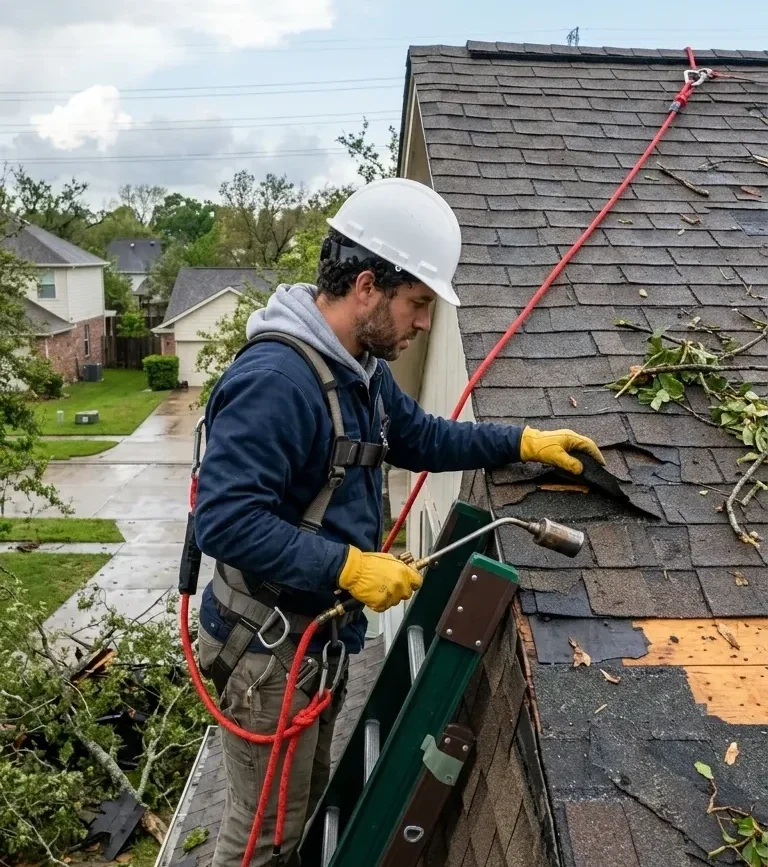
Types of Storm Damage We Repair Across Greater Houston
Houston roofs face a wider variety of storm threats than most parts of the country. Here is what each type of damage actually looks like and why it matters for your roof.
Hail Damage
Hail is the most common cause of roof damage claims in Greater Houston. The problem is that hail damage is not always obvious from the ground. Impact from hailstones bruises the shingle mat beneath the granule surface, strips granules that protect against UV degradation, dents metal vents and flashing, and leaves circular impact marks that trained inspectors can identify. A roof can look intact from the street and still have widespread functional damage. Class 4 impact-resistant shingles are available if you are replacing them after a hail event.
High Wind Damage
Sustained winds and wind gusts from thunderstorms and tropical systems are a constant threat across Greater Houston. Wind gets under the edges of shingles, lifts tabs that were already starting to separate, blows off sections that had any existing weakness, damages ridge caps that take the brunt of directional winds, and separates flashing from around chimneys and skylights. Wind damage is often visible from the ground but the surrounding areas usually has secondary damage that is not.
Hurricane and Tropical Storm Damage
Hurricanes like Ike, Harvey, and Beryl each caused widespread roof damage across Harris, Fort Bend, Montgomery, and Brazoria Counties. Tropical systems bring a combination of sustained high winds and extreme rainfall over extended periods that tests every component of a roofing system. Shingles, ridge caps, flashing, gutters, and the decking underneath can all sustain damage in the same event. After a direct hit or a close pass, most roofs across the affected area need at minimum a professional assessment.
Heavy Rain and Water Intrusion
Houston averages around 50 inches of rain per year, and heavy rain events can deliver several inches in a few hours. Rain finds its way in through any existing weak point: a flashing seal that was starting to fail, a shingle edge that lifted slightly in a prior wind event, a gutter that is not draining properly and backing water up under the eave. What looks like a roof problem after a heavy rain often started as something much smaller that the rain finally found.
Fallen Trees and Debris Impact
Tree impact is one of the most straightforward causes of roof damage but also one of the most variable. A small branch may leave a surface dent in shingles with no deck penetration. A larger limb can puncture decking, break rafters, and create immediate structural compromise. The visible damage is rarely the full extent of the problem. We assess the impact zone, surrounding shingles, the decking underneath, and the attic structure before recommending a scope of repair.
Tornado Damage
The Greater Houston area is not immune to tornadoes, and a direct hit or near miss can strip entire sections of roofing from a structure. Tornado damage tends to be severe and concentrated, affecting specific parts of the roof while leaving others relatively untouched. When a tornado has passed through a neighborhood, we assess each property individually since damage patterns vary significantly even between adjacent homes.
Most storm damage is not visible from the driveway. Hail bruises shingles in ways you cannot see from 20 feet away, and water does not always drip straight down to the spot below where the roof is damaged. These are the things worth checking after any significant weather event before you call your insurance company.
- Granules collecting in gutters, downspouts, or pooled on the ground below
- Gutters or downspouts dented, bent, or pulled away from the fascia
- Shingles that are missing, lifted, curled, or noticeably displaced
- Dents or damage on roof vents, chimney flashing, or skylights
- Siding panels that are dented, cracked, or pulling away from the wall
- Fence panels, AC unit covers, or metal surfaces with impact dents confirming hail size
- Branches or debris on the roof or against the home
- Photograph everything you observe from the ground before anything is moved
- Water stains, discoloration, or bubbling paint on ceilings
- Damp spots or active dripping in the attic
- Daylight visible through the roof deck from inside the attic
- Sagging ceiling sections that may indicate trapped water above
- Moisture around skylights or near exterior walls
- Musty smell in upper-floor rooms or the attic
- Photograph all damage you observed from inside and outside
- Call Merit Roofing at (832) 764-3060 for a free professional inspection
- Do not attempt repairs or have anyone walk the roof before the adjuster visits
- If emergency tarping is needed to prevent further water intrusion, call us first
- Note the date and approximate time of the storm for your records
- Review your deductible before deciding whether to file a claim
Commercial roofs including flat TPO, metal standing seam, and built-up systems require a different inspection approach than residential shingle roofs. Damage that is serious on a commercial flat roof is often completely invisible from the ground.
- Roof drains, scuppers, and gutters for debris blockages that could cause ponding
- Visible membrane punctures, tears, lifted seams, or open laps on flat roof sections
- Metal roofing panels for dents, lifted fasteners, or separated seams
- HVAC curbs, equipment penetrations, and pipe flashings for impact damage
- Parapet walls and coping caps for displacement or cracking
- Skylights, roof hatches, and smoke vents for cracked glazing or damaged seals
- Exterior signage, awnings, canopies, and loading dock canopies
- Any debris left on the roof surface that could puncture membrane if walked on
- Interior ceiling areas for water stains, dripping, or wet ceiling tiles
- Perimeter walls and window seals for water intrusion
- Mechanical rooms and areas below rooftop equipment for leaks
- Any inventory, equipment, or business property damaged by water
- Time and date of first observed leaks for insurance documentation
- Business interruption documentation if storm damage has affected operations
Free Storm Damage Inspections Across Greater Houston
Storm Damage and Your Insurance Claim
Most standard Texas homeowner policies cover storm, hail, and wind damage. If your roof was hit in a recent weather event, there is a reasonable chance the repair or replacement qualifies under your policy. The question most homeowners get wrong is the sequence.
Call Merit Roofing Before You Call Your Insurer
When you call your insurance company first, they dispatch their adjuster. The adjuster’s job is to assess damage from the insurer’s perspective. When you call Merit Roofing first, we inspect the roof, photograph every damaged area, and build a complete documentation package before anyone else arrives. That record makes it significantly harder for legitimate damage to get missed, understated, or attributed to a different cause.
What We Handle on Every Insurance Claim
- Free pre-claim inspection with full photo documentation of every damaged area on the roof, gutters, and siding
- Written damage report formatted to meet insurance carrier requirements
- On-site presence during your adjuster’s visit so nothing is overlooked
- Scope of work aligned to your approved insurance estimate
- Supplement coordination when legitimate damage was missed in the initial adjustment
- One inspection, one report, covering your roof, gutters, and siding since all three are often covered by the same storm claim
Texas law does not allow roofing contractors to waive your deductible. Merit Roofing complies fully with Texas regulations and does not make promises about deductible waivers. What we do promise is thorough documentation and honest work.
Commercial Storm Damage Repair in Greater Houston
Storm damage affects commercial properties differently than residential homes, and the inspection process reflects that. Flat and low-slope commercial roofs can sustain significant damage that is entirely invisible from the ground. A membrane puncture, a compromised seam, or blocked drainage after a storm can result in ponding water and interior damage that accumulates over days before anyone realizes the roof was affected.
Merit Roofing provides commercial storm damage inspections and repairs for office buildings, retail centers, industrial properties, and multi-family buildings across Greater Houston. We work with commercial insurance carriers and understand the documentation requirements that differ from residential claims.
| Commercial Service | What We Provide |
|---|---|
| Flat Roof Storm Inspection | We assess TPO, EPDM, and modified bitumen membranes for punctures, seam failures, lifted flashings, and drainage blockages that can cause ponding after a storm event. |
| Metal Roof Storm Inspection | Standing seam and exposed fastener metal systems are inspected for panel dents, lifted or missing fasteners, separated seams, and damage to ridge caps and valleys. |
| Emergency Tarping | When a storm compromises a commercial roof and rain is in the forecast, we respond to tarp and secure the affected area to prevent further water intrusion while permanent repairs are arranged. |
| Commercial Insurance Claims | We produce scope-of-damage reports formatted for commercial carriers, attend the adjuster site visit, and handle supplement coordination when initial estimates fall short of the full damage. |
| Business Interruption Documentation | When storm damage affects business operations, we provide documentation supporting business interruption claims in addition to the physical property damage report. |
| Multi-Family Properties | We inspect and repair storm damage on apartment complexes, townhome communities, and condominium properties across Greater Houston, coordinating with HOA boards and property management companies as needed. |
How Our Storm Damage Process Works
Here is what happens from the moment you call to the day your roof is back in shape.

Fast Response
Full Inspection

Your Report, Before the Adjuster

Adjuster Support

Repair or Replacement
Final Walkthrough
Why Greater Houston Homeowners and Businesses Call Merit Roofing After a Storm
After any major storm in Greater Houston, the number of roofing contractors in the area grows quickly. Companies that were not operating here before the storm show up with door hangers and big promises. It happens after every significant weather event, and it catches homeowners who are stressed and trying to move fast. Merit Roofing has been in this market for over 50 years combined. We were here before the storm, and we will be here when the work is done.
Our Commitment
-
01
We Know What Houston Storms Do to Roofs
Over 50 years of combined experience across Greater Houston means we have seen every storm damage pattern this climate produces. We know where to look and what the insurance companies expect to see.
-
02
We Move Quickly After Weather Events
Storm calls go to the front of the schedule. We can typically inspect Greater Houston properties within 24 to 48 hours of a major weather event, which matters when you are trying to document damage and protect your home.
-
03
We Document Before the Adjuster Arrives
Our pre-claim inspection and report is one of the most valuable things we provide. Homeowners who call us first consistently get better claim outcomes than those who call their insurer first.
-
04
We Cover Roof, Gutters, and Siding
A storm that hits your roof usually hits your gutters and siding too. We inspect all three in one visit and document damage across all three, which can be covered by a single claim.
-
05
We Serve Residential and Commercial
Whether you own a home in Cypress or a retail center in Sugar Land, we have the experience and the documentation capabilities to handle your storm damage claim correctly.
-
06
We Are Licensed, Insured, and Standing Behind Our Work
Fully licensed and insured in Texas. Every repair and replacement comes with our workmanship guarantee alongside applicable manufacturer warranties.
Storm Damage Repair Across Greater Houston
Also serving all communities within Harris, Fort Bend, Montgomery, and Brazoria Counties.
-
Not sure if we serve your area?
Give us a call or submit a free inspection request online.
Storm Damage Roof Repair in Houston, TX: Frequently Asked Questions
How do I know if my Houston roof has storm damage?
The most reliable way to know is a professional inspection since most storm damage is not visible from the ground. Common signs you can check yourself include granules collecting in gutters after a rain, dented vents or gutters, missing or lifted shingles visible from the yard, and water stains appearing on ceilings inside. Hail bruises the shingle mat in ways that require getting on the roof to see properly. If a significant storm passed through your area, we recommend scheduling an inspection even if nothing looks wrong from the street.
Should I call my insurance company or a roofer first after a storm?
Call us first. When you contact your insurance company before getting your own inspection, you are relying entirely on their adjuster’s assessment of your damage. When Merit Roofing inspects first, we document every damaged area with photographs and a written report before the adjuster arrives. That documentation gives you a complete record of what your roof sustained and makes it significantly harder for legitimate damage to be missed or attributed to something other than the storm.
Does my homeowner's insurance cover storm damage in Houston?
Most standard Texas homeowner policies cover hail, wind, and hurricane damage. Flooding typically requires a separate flood insurance policy. The documentation you submit matters as much as the coverage you have. Merit Roofing produces damage reports formatted to meet carrier requirements, and our on-site presence during the adjuster visit tends to result in better claim outcomes for homeowners.
How quickly can Merit Roofing respond after a storm in Greater Houston?
Storm calls get moved to the front of our schedule. In most cases we can inspect Greater Houston properties within 24 to 48 hours of a major weather event. If you have active water intrusion and need emergency tarping to protect the interior of your home while you wait for a full inspection, tell us that when you call and we will address that first.
What does a storm damage inspection cover?
We inspect every component of your roofing system including shingles, ridge caps, flashing around chimneys and skylights, vents, valleys, gutters, and downspouts. We also inspect siding for impact damage since it is often covered under the same claim as the roof. We access the attic when possible to check for signs of water intrusion. Everything we find gets photographed and documented in a written report.
How long do I have to file a storm damage claim in Texas?
Texas homeowner policies generally allow one year from the date of the storm to file a claim. We strongly recommend not waiting. Claims filed long after a storm event are more likely to face skepticism from insurers about when and how the damage occurred. Acting within the first few weeks after a storm also helps you get in line before repair demand peaks, which matters for scheduling when contractors are in high demand.
Does Merit Roofing also handle siding and gutter damage from storms?
Yes. Storm damage to gutters and siding is frequently covered under the same homeowner policy as the roof damage, from the same storm event. We inspect all three in a single visit and document everything in one report, which simplifies the claim and ensures nothing gets left out.
Does Merit Roofing serve commercial properties after storm damage?
Yes. We inspect and repair storm damage for office buildings, retail centers, industrial properties, and multi-family buildings across Greater Houston. Commercial roof inspections require a different process than residential since flat and low-slope systems can sustain significant damage that is not visible from the ground. We work with commercial insurance carriers and understand the documentation requirements involved in commercial claims.
What happens if my adjuster approves less than the full scope of repair?
This happens more often than homeowners expect. When we believe legitimate damage was missed or undervalued in the initial adjustment, we handle supplement coordination on your behalf. We provide additional documentation supporting the full scope of damage and work with your carrier to get the approved estimate aligned with what your roof actually needs.